
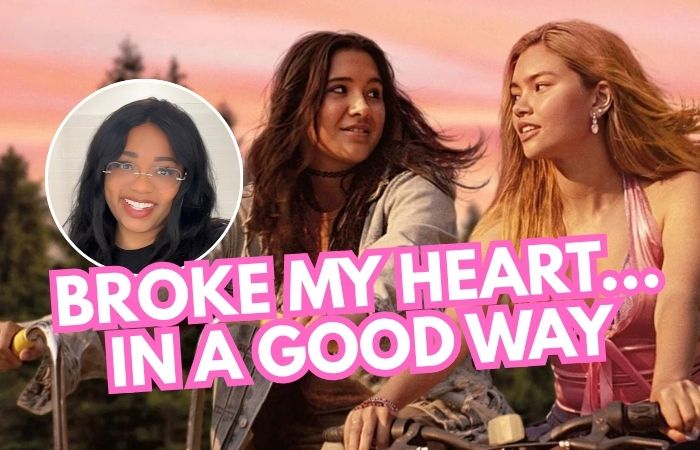
I watched the movie Girls Like Girls in theaters at the end of June 2026 with my husband in celebration of Pride Month, and first things first, but I have to say congratulations to Hayley Kyoko for creating and directing this movie because it’s very obvious she put her heart and soul into it.
Her song of the same title that came out back in 2015 still has so many of us in a chokehold, and I think it’s absolutely beautiful that she was able to produce an entire movie out of it, especially one based on her own real-life coming-of-age experiences.
Her novel of the same name was published in 2023, and although I haven’t read the book yet, I feel more inclined to now that I’ve seen the movie. I feel like the book is probably going to include a lot of unspoken thoughts and things that were left unsaid between the two main characters, Coley and Sonya.
This is a coming-of-age movie I resonated with even as a straight woman. its a movie I wish homophobic people would watch, so they’d better understand the queer community. It was vulnerable, honest, raw, sweet, relatable, painful… all the things.
I walked into the movie expecting to see a cutesy, sweet, coming-of-age romance about two teenage girls falling in love for the first time. But what I actually got was something far deeper, more thought-provoking, and actually heartbreaking.
Spoiler alert here, but the relationship focused on two young women recognizing their attraction for each other, with one of them scared to accept herself regarding her sexuality.
I went into the movie thinking it would be light and adorable, but I left feeling full of empathy for people in the LGBTQ community who struggle with self-acceptance like Sonia, and those who go through seasons of rejection and loneliness, like Coley.
This movie is centered on vulnerability, first love, personal identity, and emotional growth. There are other layers to this movie that go beyond just the relationship blossoming between Sonia and Coley. We see Sonia engaging in a toxic relationship with a homophobic loser whom she likely started dating as a way of trying to convince herself that she isn’t attracted to girls at all. We also see Coley grieving the loss of her mother and trying to readjust to life in her father‘s household, even though she never got to know her dad as she was growing up.
This movie resonated with me, even as a straight woman, because of all the layers. Moments in this movie felt universally relatable, when it comes to the heavy-hitting energy of falling in love for the first time, feeling confused over another person‘s hot and cold energy towards you, the intensity of parental trauma, and the painfulness of heartbreak when you realize a relationship might not actually work out.
I have to acknowledge that the queer experience of finding and falling in love for the first time is ABSOLUTELY more complicated than the straight experience since straight people don’t also have to navigate societal constructs, judgment from others, and potential disapproval from parents. This movie shines a light on that reality, especially with Sonia, who spoke about fears she had over the way her friends and family would perceive her if they knew she was dating a girl.
I saw my younger self and teenage emotions reflected in this movie, thinking back on my relationship with my high school sweetheart, even though I had a relationship with a boy. It’s not comparable at all, regarding how difficult it is to embrace, love, and sexuality as a queer teenager, but the closest comparison I can make is the fact that my own mother heavily scrutinized me in my high school relationship because she was obsessed with purity culture. She leaned into slut shaming to control me and force me into submission and obedience. Instead of having normal, appropriate conversations about the risks of going too far too soon, she tried to fear-monger me onto the purity pipeline. She had me and my sisters sign purity contracts promising we’d save our virginity for marriage, and we wore purity rings for a while as well. That stuff was crucial in my household. I felt ashamed of my own female body most days growing up. Again, I have to clarify that I don’t believe my experience was anywhere near as challenging as the experience LGBTQ teenagers go through, but I’m only putting this out there to explain the way I was able to personally empathize with the characters a little more while watching this movie.
But I also want to add that shared identity and queer sexual orientation aren’t required to connect with this film. I need to drive the point home that I think everyone should watch it, whether you identify as straight or queer. Including the parental trauma piece.
One of the most heartbreaking things Coley said through Tears was her sadness knowing her mother died without really knowing her. Coley never had the opportunity to come out of the closet to her mom before her mom died. That moment devastated me more than I thought it would. My mom doesn’t know me for who I really am, and not because I am queer, but because she created closed off, hostile, and fake relationship energy between us when I was a teenager, and then later chose to coddle the ignorance of my Trump-supporting stepdad, who also happens to be a white man. So I live my life knowing that my mother doesn’t really know me or care to know me, and when I saw Coley crying to Sonia with those words, it emotionally impacted me.
Another heartbreaking thing she said to her father was that he was the first person who taught her she wasn’t worthy of being missed by anyone. She said that because he wasn’t around during her childhood. And as a fellow girly with daddy issues, that hit home for me, too. I have such a great relationship with my father now in my adulthood, but damn did I need him during my teenage years, and he wasn’t there. The pain Coley felt in this movie towards her parents moved me and connected with me.



Leave a Reply