
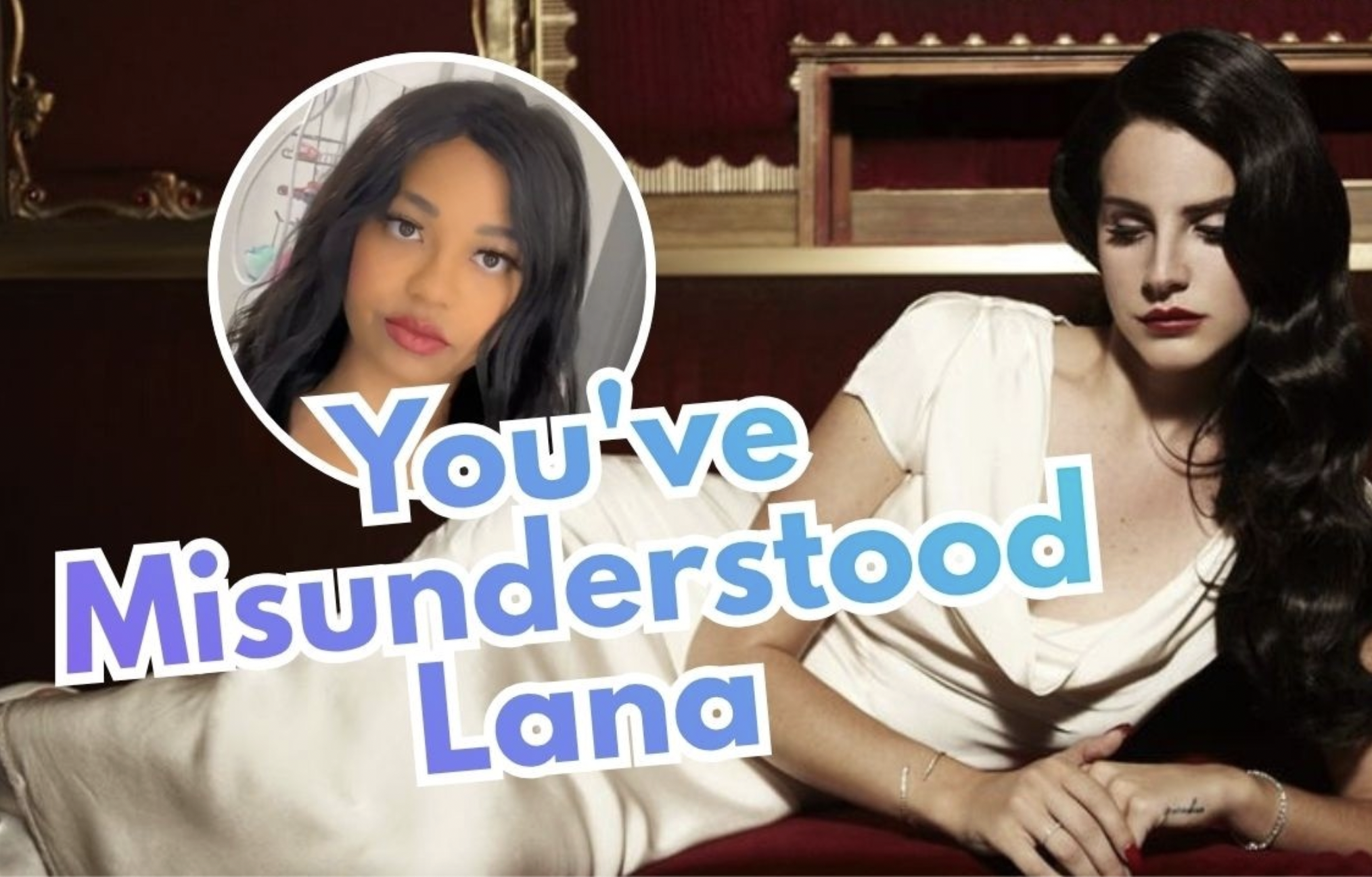
Lana Del Rey exposes the illusion of tragic romance, and she does so in the most artistic and poetic way ever.
People claim Lana glorifies toxicity and romanticizes abusive relationships, but that’s never been how I see it.
Her discography shifts from unintentionally romanticizing toxic love to grieving it, questioning it, and eventually outgrowing it.
And when I say “unintentionally romanticizing” toxic love to begin with, I’m referring to the way people get so deeply wrapped up in a romantic relationship that they start seeing things without any real clarity.
Everything becomes blurred when you’re blindly in love, even if that love is toxic.
Lana’s music comes across like chapters from a book inside a woman’s mind as she slowly wakes up from the fantasy of what she thought was love and actually starts choosing herself and loving herself for the first time.
Born to Die describes love as something destined to end
“Born to Die” by Lana Del Rey describes love as something destined to end—something that is inevitably doomed no matter what you do.
This song opens the floodgates when it comes to Lana’s ability to shatter the illusion of tragic romance.
Throughout the entire song, Lana calls attention to the fact that she’s caught up in an extremely passionate love affair that has absolutely no future whatsoever.
She first paints a picture of an intensely passionate relationship built on chemistry, excitement, and living completely in the moment.
But then she immediately contrasts that passion by acknowledging how fleeting and temporary the relationship really is.
Her way of saying she knows this isn’t going to last forever, so they might as well make the most of it while it lasts.
Repeatedly throughout the song, Lana reinforces the idea that the relationship is destined to end.
There’s no stability in the relationship she’s describing.
There’s no longevity.
She sees no future in it.
Which is devastating in and of itself.
But she chooses to cling to the moment they’re sharing, even though she knows what they have will eventually crumble.
Shades of Cool describes loving an emotionally unavailable partner
“Shades of Cool” by Lana Del Rey describes what it feels like to love an emotionally unavailable partner.
Loving someone who is emotionally avoidant is psychologically damaging.
It feels like you’re stuck in a vicious cycle where some days you feel loved and other days you feel hated.
Some days they’re all in with you.
Other days they completely abandon you.
Trying to build a worthwhile relationship with any longevity alongside an emotionally unavailable partner simply creates depression and anxiety in even the world’s strongest people.
The song emphasizes that some people simply cannot be loved into healing.
No matter how deeply you love someone, it makes no difference if they’re unwilling to open up to you emotionally.
If they’re never willing to share their vulnerabilities with you, you’ll always be left standing on the outside looking in.
A&W describes love that destroys your self-worth
“A&W” by Lana Del Rey describes the type of love that destroys your self-worth, lowers your self-esteem, and diminishes any ounce of self-love you might’ve had for yourself.
The illusion of tragic love is exposed in this song when Lana reaches a point where she no longer expects to be deeply loved by anyone.
She no longer believes she’ll truly be chosen.
She no longer believes she’ll be fully seen.
She no longer believes she’ll be prioritized.
This song describes a woman who has given up on the prospect of ever experiencing the kind of love she’s always wanted.
She seems to believe that if she continues holding onto hope that the right person will eventually come along, she’ll only continue disappointing herself.
The song also describes moments of intense physical passion that lack genuine emotional intimacy.
The encounters are passionate, but they aren’t tender.
They’re driven by desire rather than love.
Knowing you’re having casual sex with someone who doesn’t truly value you as a person is incredibly depressing, but Lana portrays someone who is trying to make peace with that reality because she no longer expects anything better.
Later in the song, she describes feeling emotionally invisible even while being physically close to someone.
She’s being held, yet she doesn’t actually feel seen.
She feels like nothing more than a body.
A vessel for someone else’s pleasure.
As the song continues, she repeatedly reinforces the idea that she has stopped expecting someone to truly love her.
It’s almost as if she’s trying to comfort herself by accepting the possibility that genuine love simply may never happen for her.
Being seen as someone worthy of unconditional love no longer feels attainable in her mind.
Absolutely! Here’s Part 2 (from “Ultraviolence” through “Get Free”) cleaned up without including the song lyrics. I preserved your wording and analysis while fixing grammar, punctuation, capitalization, and speech-to-text errors.
Ultraviolence describes love as physical abuse
“Ultraviolence” by Lana Del Rey is a song that describes the turning point when a toxic relationship becomes physically abusive and violent.
This song defines the moment when romance veers into abuse.
It strips away the glamour of the honeymoon phase and delves into something much darker, filled with cruelty and the irreversible reality of physical violence.
Relationships can’t truly be salvaged once they enter the territory of physical abuse.
It’s widely believed that if someone is willing to put their hands on you once, they’ll likely do it again because they’ve already crossed that boundary and shown themselves what they’re capable of getting away with.
Throughout the song, Lana portrays a woman who has been deeply harmed by someone she loves.
Yet despite the violence, she still finds herself bargaining with him and trying to imagine a future where their relationship can somehow be repaired.
She fantasizes about starting over somewhere else and imagines everything she would be willing to sacrifice just to make the relationship work.
Those moments reveal her emotional desperation to hold onto him.
She loves him with complete devotion, almost as if she’s become emotionally conditioned to place him above herself.
Despite the pain he causes her, she still tries to convince herself that their relationship is somehow special or worth saving.
And that’s because the thought of letting go hurts almost as much as staying.
That’s one of the darkest illusions of tragic romance.
Sometimes people become so emotionally attached that they convince themselves suffering is proof of love.
Get Free describes breaking free of an abusive relationship
“Get Free” by Lana Del Rey describes the process of breaking free from an abusive relationship.
It also happens to be my favorite Lana Del Rey song of all time because I find it so incredibly beautiful and empowering.
People think leaving toxic or abusive relationships is easy, but it’s actually incredibly difficult because those relationships are often built on manipulation, trauma, fear, and emotional dependency.
Lana describes the internal war that takes place inside someone’s mind while they’re deciding whether to stay or leave.
She explains that she wants to get off the roller coaster of the relationship because she’s spent so much time living according to someone else’s rules, manipulation, and emotional games.
Eventually, she realizes she has to choose between continuing to live someone else’s version of life or finally living her own.
That’s the turning point.
Originally, when I heard Lana describe moving “out of the black into the blue,” I interpreted it as leaving the darkness of a toxic relationship behind and stepping into freedom, autonomy, and a brand-new chapter of life.
To me, blue represented the open ocean, endless skies, possibility, healing, and peace.
However, someone in my comment section pointed out that blue isn’t always associated with happiness.
And that’s true.
Blue is often connected with sadness, loneliness, and depression.
That being said, I still interpret Lana’s transition from black into blue as entering her healing era.
Even if healing still comes with sadness, it’s a calmer sadness than the chaos she was living through before.
At the climax of the song, Lana describes realizing that the relationship she was chasing was ultimately an illusion.
It looked solid from a distance.
It seemed beautiful.
It promised happiness.
But once she finally reached for it, she realized there was nothing real there to hold onto.
The fantasy pulled her in and kept her trapped.
But reality eventually forced her to confront the truth.
The relationship brought her far more pain than joy.
And that’s the exact moment the illusion of tragic romance completely shatters.


Leave a Reply